
Tag: Community
-

IIID VisionPlus conference, 20-21 June 2024, Vienna, Austria
The VisionPlus conference celebrates its 20th edition this year – a great opportunity to showcase the huge variety of what information design can be. Speakers from 14 countries on 4 continents will be joining us in Vienna this year.
-
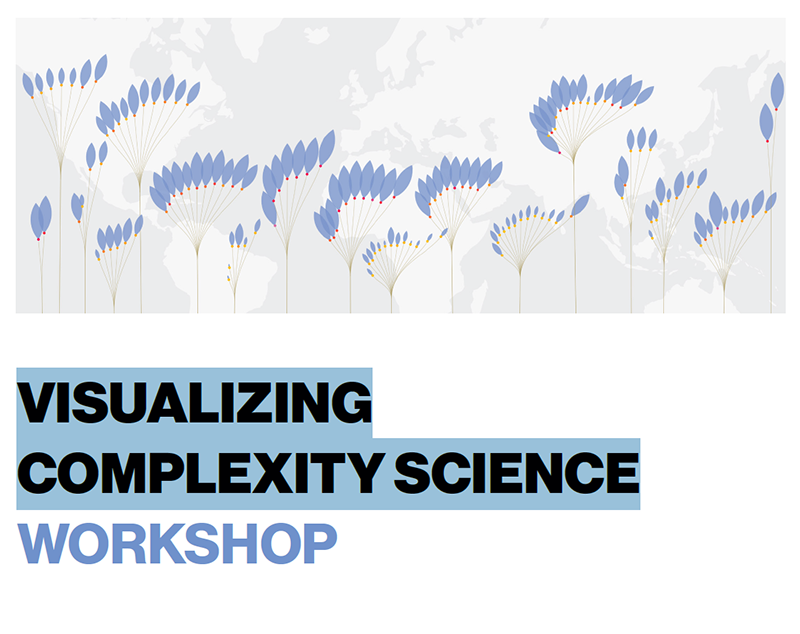
Workshop: Visualizing Complexity Science, Vienna, 26-30 August 2024
Liuhuaying Yang and Paul Kahn host a five-day data visualization workshop in Vienna. Participants engage in modelling complexity science problems.
-

IIID Conversation: Design for Digital Empowerment, 28 March 2024, 17:00 UTC
The Community Network Roadmap (CNR) is a guide for people with no prior background in network technologies to build and maintain their own broadband networks. In this presentation, Katherine and Shradda will share an overview of the CNR project, including highlights of the highly interdisciplinary collaboration process, and look at our design decisions in terms…
-

IIID Conversation with Gillian Harvey, 5 October 2023, 15:00 UTC
Gillian Harvey will discuss two projects designed to increase empathy and reduce stigma toward people who experience addiction.
-

IIID Conversation with Sigitas Gužauskas, 6 July 2023, 15:00 UTC
To enhance clarity, information design often simplifies complex real-world phenomena into basic visual representations. By adding an experiential layer to the dry data, designers can aim to captivate a wider audience and offer a broader range of interpretations.
-

IIID Conversation with Rui Caminha, 1 June 2023, 15:00 UTC
Rui Camilha introduces award-winning legal information design from Villa – Visual Law Studio, in Brazil.
-

IIID Conversation with Sheila Pontis, 4 May 2023, 15:00 UTC
Information designers know that they should create solutions that address users’ needs. But while some of us claim to do it all the time, in reality many find it hard to integrate this way of working into our daily practice.
-

IIID Conversation with Karel van der Waarde, 6 April 2023, 15:00 UTC
Taking medicines is a stressful activity. Opening a cardboard box, reading a leaflet, handling tiny pills, checking the dosage and the time, and considering potential side-effects require the capacities of a strong, astute, and healthy adult.
-

IIID Conversation with Stefania Passera, 2 March 2023, 15:00 UTC
“I have read and understood the terms and conditions” is the biggest lie on the internet – no one reads, and definitely no one understands (except the lawyers).
-

IIID Conversation with Maxwell Roberts, 2 February 2023, 15:00 UTC
We’re marking the 90 year anniversary of the London Underground network diagram with a talk by Maxwell Roberts, who is the pre-eminent expert on the diagram and author of several books on it.